Kenmore 90 Series Washer Manual: A Comprehensive Guide
This manual details operation, maintenance, and troubleshooting for your Kenmore 90 Series washer, ensuring optimal performance and longevity of your appliance.
The Kenmore 90 Series washers represent a commitment to reliable and efficient laundry care, designed to simplify your household chores. These appliances, sold through Sears and Kenmore, are known for their durability and performance. This manual serves as a comprehensive resource for owners, covering everything from initial setup and daily operation to detailed maintenance procedures and troubleshooting guidance.
Understanding your washer’s features and capabilities is key to maximizing its lifespan and achieving optimal cleaning results. Whether you have a top-load or front-load model, this guide will provide specific instructions tailored to your machine. Always refer to your model and serial numbers, located on the appliance’s data plate, when contacting customer support or ordering replacement parts.
Understanding Your Washer’s Model and Serial Numbers
Locating your Kenmore 90 Series washer’s model and serial numbers is crucial for accessing support, ordering parts, and referencing specific documentation. These numbers uniquely identify your appliance, allowing for accurate assistance. Typically, you’ll find this information on the Model and Serial Number Plate.
This plate is usually located on the washer’s cabinet – often inside the door (front-load models), behind the lid (top-load models), or on the back panel. Record these numbers in a safe place for future reference. When contacting Kenmore customer support or a Sears store, having both the model and serial number readily available will expedite the process and ensure you receive the correct information for your specific machine.
Safety Precautions and Warnings
Before operating your Kenmore 90 Series washer, carefully review these essential safety precautions to prevent injury and ensure safe operation. Always read and follow all instructions provided in this manual. Disconnect the power supply before performing any maintenance or cleaning.
Never allow children to play with or around the washer. Do not attempt to repair the appliance yourself; contact qualified service personnel for assistance. Avoid contact with water and electrical components. Ensure the washer is properly grounded. Do not wash items that have been cleaned with flammable liquids. Heed all warning labels affixed to the machine, and prioritize safe practices during every use to avoid potential hazards.
Operating Instructions
Follow these detailed steps to effectively utilize your Kenmore 90 Series washer, from selecting cycles to adding detergent for optimal cleaning results.
Control Panel Overview
The Kenmore 90 Series washer’s control panel is designed for intuitive operation. You’ll find a cycle selector dial allowing you to choose from various wash cycles – delicate, normal, heavy duty, and more.
Temperature settings enable precise water temperature control, catering to different fabric types. Digital displays clearly indicate cycle progress and remaining time.
Additional options include spin speed adjustments, soil level selection, and specialized cycles like bulky items or quick wash.
Start/Pause buttons initiate or interrupt the wash cycle. Indicator lights signal the current stage of operation – wash, rinse, spin. Familiarize yourself with these controls for efficient use.
Wash Cycle Selection Guide
Selecting the correct wash cycle is crucial for optimal cleaning and fabric care. The ‘Normal’ cycle suits everyday laundry, while ‘Delicate’ is ideal for lingerie and sheer fabrics.
‘Heavy Duty’ tackles heavily soiled items like work clothes and towels. ‘Permanent Press’ minimizes wrinkles in synthetic blends.
A ‘Bulky Items’ cycle accommodates comforters and blankets, and a ‘Quick Wash’ provides a fast refresh for lightly soiled clothes.
Consider fabric type and soil level when choosing. Always refer to garment care labels; Improper cycle selection can lead to damage or ineffective cleaning.
Water Temperature Settings
Your Kenmore 90 Series washer offers multiple water temperature options to cater to diverse fabric types and cleaning needs. ‘Hot’ water is best for whites and heavily soiled items, maximizing cleaning power but potentially causing fading.
‘Warm’ water provides a balance between cleaning effectiveness and color protection, suitable for most everyday laundry. ‘Cold’ water is gentle on colors and delicate fabrics, minimizing shrinkage and fading.
Always check garment care labels for recommended water temperatures. Using excessively hot water can damage certain fabrics.
Cold water is also energy efficient.
Load Size Recommendations
Optimizing load size is crucial for efficient washing and preventing damage to your Kenmore 90 Series washer. Avoid overloading, as this restricts water circulation and hinders proper cleaning.
For top-load models, a good rule of thumb is to fill the wash basket approximately three-quarters full. For front-load washers, loosely fill the drum, leaving ample space for movement.
Smaller loads are ideal for delicate items or heavily soiled clothes. Larger loads are suitable for bulky items like towels and bedding, but ensure they aren’t packed tightly.
Overloading can strain the motor and reduce washing performance.
Adding Detergent and Fabric Softener
Proper detergent and fabric softener usage ensures optimal cleaning and fabric care with your Kenmore 90 Series washer. Always use High Efficiency (HE) detergent in front-load models to prevent excessive suds.
Refer to the detergent packaging for recommended amounts based on load size and soil level. Pour detergent into the designated dispenser drawer; avoid placing it directly into the wash basket.
Fabric softener should be added to the fabric softener dispenser, never directly onto clothes, to prevent staining.
Do not overfill dispensers, as this can cause residue buildup.

Maintenance and Care
Regular cleaning of the washer interior, dispensers, and filters is crucial for maintaining peak performance and preventing odors and residue buildup.
Cleaning the Washer Interior
To effectively clean the interior of your Kenmore 90 Series washer, begin by running an empty hot water cycle with a cup of white vinegar added directly to the drum. This helps dissolve detergent residue and mineral buildup. For stubborn stains or mildew, create a paste of baking soda and water, apply it to the affected areas, and let it sit for approximately 30 minutes before wiping clean.

Pay close attention to the area around the door gasket (front-load models), as this is prone to mold and mildew growth. Regularly wipe down the gasket with a damp cloth and a mild cleaning solution. After each wash cycle, leave the washer door slightly ajar to promote air circulation and prevent moisture buildup. Avoid using abrasive cleaners, as they can damage the washer’s finish.
Cleaning the Dispenser Drawers
Regularly cleaning the dispenser drawers of your Kenmore 90 Series washer is crucial for optimal performance. Remove the drawers by pressing the release tab (refer to your manual for specific location). Wash the drawers with warm, soapy water, using a soft brush to remove any dried detergent or fabric softener residue. Rinse thoroughly to ensure no soap remains.
Inspect the dispenser housing within the washer for buildup and clean it with a damp cloth. Pay attention to the areas where the drawers slide in, as these can accumulate residue. Ensure the drawers are completely dry before reinserting them. A clogged dispenser can lead to detergent not being properly dispensed, impacting wash quality.
Cleaning the Door Glass (Front Load Models)
Maintaining a clean door glass on your front-load Kenmore 90 Series washer is essential for visibility and hygiene. Regularly wipe the glass with a soft, damp cloth to remove any soap scum or residue. For stubborn stains or buildup, use a glass cleaner specifically designed for appliances.
Avoid abrasive cleaners, as they can scratch the glass. Inspect the rubber gasket around the door opening for mold or mildew, and clean it with a diluted bleach solution (always test in an inconspicuous area first). Ensure the gasket is thoroughly rinsed and dried. A clean door and gasket prevent odors and maintain the washer’s efficiency.
Filter Cleaning Procedures
Regularly cleaning the filter in your Kenmore 90 Series washer is crucial for optimal performance and preventing drainage issues. Locate the filter access panel, typically at the lower front of the machine. Have towels ready, as some water may spill during removal. Carefully unscrew and remove the filter cap, and gently pull out the filter.
Remove any lint, debris, or foreign objects trapped within the filter. Rinse the filter thoroughly under running water until clean. Inspect the filter housing for any obstructions and remove them. Reinstall the filter securely, ensuring a watertight seal. A clean filter ensures efficient draining and prevents potential damage to the pump.
Long-Term Storage Instructions
If storing your Kenmore 90 Series washer for an extended period, proper preparation is essential to prevent damage. First, disconnect the washer from both the power and water supply. Thoroughly clean the interior, removing any remaining detergent or fabric softener. Leave the door slightly ajar to prevent mildew growth and odors.
Disconnect and drain all water lines, and wipe them dry. Consider adding a moisture-absorbing product inside the drum. Cover the washer with a breathable cloth to protect it from dust. Store in a dry, climate-controlled environment, avoiding extreme temperatures. Periodically check for any signs of moisture or damage during storage.
Troubleshooting Common Issues
This section provides solutions for typical problems like the washer not starting, draining, or spinning, alongside error code explanations.
Washer Won’t Start
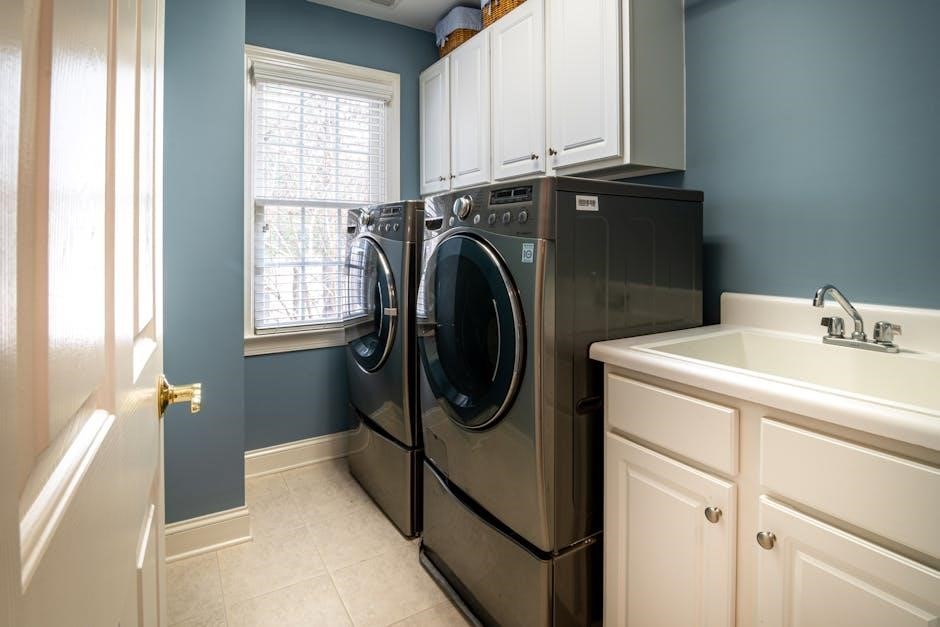
If your Kenmore 90 Series washer fails to start, begin by verifying the power supply. Ensure the washer is properly plugged into a functioning outlet and that the circuit breaker hasn’t tripped.
Next, check the lid switch or door lock (for front-load models) – the washer won’t operate if these aren’t engaged. Confirm the control panel isn’t locked; some models have a child lock feature.

Also, examine the water supply valves to ensure they are fully open, as insufficient water pressure can prevent startup. If the issue persists, consult the error code display (if applicable) for specific diagnostics, or contact Kenmore customer support for assistance;
Washer Not Draining
If your Kenmore 90 Series washer isn’t draining, the first step is to check the drain hose for kinks or obstructions. Ensure it isn’t bent or crushed, and that it’s properly inserted into the drainpipe.
Next, locate and clean the drain pump filter – this often collects lint, coins, and other debris. Refer to the ‘Filter Cleaning Procedures’ section for detailed instructions.
A clogged drain pump is a common cause. If the filter is clear, the pump itself may be faulty and require replacement. Verify the drain pump isn’t blocked by small items. If problems continue, contact a qualified technician or Kenmore support.
Washer Not Spinning
If your Kenmore 90 Series washer isn’t spinning, first ensure the lid switch (for top-load models) is functioning correctly. The washer won’t spin if it doesn’t detect the lid is closed. An unbalanced load can also prevent spinning; redistribute the clothes evenly inside the drum.
Check the drive belt for wear or breakage – a damaged belt won’t effectively transfer power to the drum. A faulty motor coupling is another potential cause, connecting the motor to the transmission.
If these checks don’t resolve the issue, the motor or the transmission itself may be defective, requiring professional diagnosis and repair.
Leaking Water Issues
Water leaks from your Kenmore 90 Series washer can stem from several sources. Inspect the water inlet hoses connecting to the washer for cracks or loose connections; tighten them or replace if damaged. Examine the drain hose for proper seating and any signs of wear.
For front-load models, check the door boot (gasket) for tears or debris preventing a tight seal. A clogged drain pump can also cause leaks as pressure builds up.
Internal leaks might indicate a problem with the tub seal or internal hoses, requiring professional assessment. Always disconnect power before investigating any leak to prevent electrical shock.
Error Codes and Their Meanings
Your Kenmore 90 Series washer utilizes error codes to diagnose internal issues. A common code, “F01,” often indicates a water inlet valve problem, potentially restricting water flow. “F02” typically signals an issue with the drain pump, preventing proper water removal.
Codes like “LE” suggest an imbalance during the spin cycle, requiring load redistribution. “OE” usually points to an overfill condition, potentially caused by a faulty water level sensor.
Consult the complete error code list in your washer’s manual or on the Kenmore website for a comprehensive understanding of each code and recommended troubleshooting steps.

Parts and Diagrams
Access exploded views and detailed diagrams to identify key components for repair, aiding in locating and replacing necessary parts for your Kenmore 90 Series.
Accessing Parts Diagrams
Locating the correct parts diagrams for your Kenmore 90 Series washer is crucial for successful repairs. Often, these diagrams aren’t included directly within the standard owner’s manual. Instead, you’ll typically find them online through the Sears PartsDirect website or similar appliance parts retailers. You’ll need your washer’s complete model and serial number – usually found on a plate located on the appliance itself – to ensure you’re viewing the diagrams specific to your machine.
These online resources provide exploded views, clearly illustrating how each component fits together. Searching by model number will yield a comprehensive list of diagrams, categorized by section (e.g., motor, pump, control panel). Diagrams are often interactive, allowing you to click on a part to view its corresponding part number and availability. Remember to carefully verify the part number before ordering to guarantee compatibility.
Identifying Key Components
Understanding the major components of your Kenmore 90 Series washer is essential for both maintenance and repair. Key parts include the motor, responsible for agitation and spinning; the pump, which drains water; and the control panel, governing cycle selection and settings. The inner and outer tubs house the laundry during washing and rinsing. The door boot (front loaders) creates a watertight seal, while the dispenser drawers manage detergent and fabric softener.
Additionally, familiarize yourself with the water inlet valves, regulating water flow, and the drive belt (some models), connecting the motor to the tub. Identifying these components within the parts diagrams (see section 8.1) will greatly aid in troubleshooting and replacement procedures. Knowing their function helps diagnose issues effectively.
Replacing Common Parts
Several parts on your Kenmore 90 Series washer are relatively straightforward to replace, potentially saving on service calls. These include the door boot (front loaders), often replaced due to tears; the water inlet valves, if experiencing filling issues; and the drive belt, if the drum isn’t spinning. Detergent dispenser drawers are also easily swapped if cracked or damaged.
Before attempting any replacement, disconnect power! Consult the parts diagrams (section 8.1) for proper orientation. Online resources often provide step-by-step video guides. Ensure you have the correct replacement part before starting. If unsure, consult a qualified technician – improper installation can cause further damage or safety hazards.
Finding Replacement Parts
Locating replacement parts for your Kenmore 90 Series washer is crucial for successful repairs. Begin by noting your washer’s complete model and serial number (section 3.2) – this is essential for accurate part identification. Sears PartsDirect is a primary source, offering a vast catalog specifically for Kenmore appliances.
Numerous online retailers also stock Kenmore parts, but verify compatibility with your specific model. Local appliance parts stores can provide assistance and often have parts in stock. When ordering, double-check the part number and description to ensure it matches your needs. Consider comparing prices across different vendors to secure the best deal.
Additional Resources
For further assistance, contact Kenmore customer support or explore online manuals and FAQs for troubleshooting and warranty details.
Contacting Kenmore Customer Support
Need direct assistance with your Kenmore 90 Series washer? Kenmore provides several avenues for support. The most efficient method is often contacting your nearest Sears store, as they frequently handle Kenmore appliance inquiries. Be prepared to provide your washer’s complete model and serial numbers – these are crucial for accurate assistance and identifying specific parts or troubleshooting steps.
You can typically find the model and serial number on the Model and Serial Number Plate located on the appliance. Alternatively, explore the Sears website for online support options, including live chat and a comprehensive FAQ section. For more complex issues, a phone support line is available, though wait times may vary. Having your proof of purchase readily available can expedite the support process.
Warranty Information
Your Kenmore 90 Series washer is backed by a Kenmore warranty, offering peace of mind against manufacturing defects. The specific terms and duration of your warranty depend on the purchase date and the model of your washer. Generally, Kenmore warranties cover parts and labor for a defined period, typically one year for full coverage, with extended options available for purchase.

To understand your specific warranty details, refer to the original purchase documentation or visit the Sears website. Registering your appliance upon purchase is highly recommended, as it simplifies the claims process. Keep your proof of purchase safe, as it’s required for any warranty service requests. Warranty coverage excludes damage resulting from misuse or improper installation.
Online Manuals and FAQs
Kenmore provides extensive online resources to support your 90 Series washer experience. You can access digital versions of your owner’s manual, troubleshooting guides, and parts diagrams directly on the Sears website. A comprehensive Frequently Asked Questions (FAQ) section addresses common issues and provides step-by-step solutions.
These online resources are available 24/7, offering convenient self-service support. Searching by model number ensures you find information specific to your appliance. Additionally, online forums and communities dedicated to Kenmore appliances can offer valuable insights and peer-to-peer assistance. Utilize these digital tools to quickly resolve issues and maximize your washer’s performance.