
Peroneal Tendonitis Exercises: A Comprehensive Guide
Discover a structured rehabilitation plan, including downloadable peroneal tendonitis exercises PDF, designed to reduce pain, rebuild strength, and restore optimal ankle function.
Understanding Peroneal Tendonitis
Peroneal tendonitis represents inflammation of the peroneal tendons, crucial for ankle stability and foot movement. This condition arises from repetitive strain, overuse, or sudden injury, causing pain along the outer ankle. Peroneal tendonitis exercises PDF resources often emphasize a phased approach to recovery.
Understanding the underlying cause is vital; increased load and friction contribute significantly. Tendons, connecting muscles to bones, lack significant elasticity, making them vulnerable to strain. Effective management involves reducing inflammation, restoring strength, and improving proprioception – your body’s awareness of its position in space. A comprehensive exercise program, detailed in available guides, is key to long-term success and preventing recurrence. Early intervention, guided by a professional, is highly recommended.
What are the Peroneal Tendons?
Peroneal tendons, located on the outer side of the ankle, are vital for stabilizing the foot and ankle, and enabling movements like pointing and flexing the foot downwards. There are two peroneal tendons: the peroneus longus and the peroneus brevis. These tendons run along the outside of the ankle and attach to the foot.
They play a crucial role in preventing ankle sprains and maintaining balance. Peroneal tendonitis exercises PDF guides often highlight the importance of understanding their function before starting rehabilitation. Thousands of tendons exist throughout the body, connecting muscles to bones with strong, yet not very elastic, tissue. Proper function relies on their strength and resilience, making them susceptible to strain with overuse or injury.
Causes of Peroneal Tendonitis
Peroneal tendonitis typically arises from overuse or repetitive strain, leading to inflammation. Increased load and repetitive motions, like running or jumping, can cause the tendons to rub against the bone. This friction is a primary culprit.
Ankle sprains, high-impact activities, and improper footwear also contribute significantly. Individuals with high arches or those who suddenly increase their activity level are at higher risk. Peroneal tendonitis exercises PDF resources emphasize identifying and addressing these contributing factors. Tendons, while strong, can be strained, and understanding these causes is key to prevention and effective rehabilitation. Ignoring early symptoms can lead to chronic issues.
Symptoms of Peroneal Tendonitis
Peroneal tendonitis manifests primarily as pain located on the outer side of the ankle. This pain often worsens with activity, particularly during running, jumping, or even walking. Swelling and tenderness are common around the tendons. A snapping sensation may be felt as the tendons move over the ankle bone.
Instability in the ankle is another frequent symptom, making it feel like the ankle might give way. Peroneal tendonitis exercises PDF guides often detail self-assessment techniques to identify these symptoms. Early recognition is crucial. Ignoring these signs can lead to chronic pain and instability, hindering daily activities and requiring more intensive treatment.
Diagnosis of Peroneal Tendonitis
Diagnosing peroneal tendonitis typically begins with a thorough medical history and physical examination. A healthcare professional will assess your symptoms, activity level, and any previous injuries. Palpation – feeling for tenderness – along the peroneal tendons is a key component.
While a physical exam often provides a strong indication, imaging tests may be necessary to confirm the diagnosis and rule out other conditions. Peroneal tendonitis exercises PDF resources often emphasize the importance of accurate diagnosis before starting any exercise program. X-rays can identify bone abnormalities, while an MRI provides detailed images of the tendons themselves, revealing inflammation or tears.
Physical Examination
A comprehensive physical examination is crucial for diagnosing peroneal tendonitis. The examiner will assess your ankle’s range of motion, looking for pain or limitations during movement. Specific tests involve palpating (feeling) along the peroneal tendons, located on the outside of your ankle, to pinpoint tenderness.
They’ll also evaluate your gait (walking pattern) and assess for instability. Peroneal tendonitis exercises PDF guides often recommend consulting a professional for proper evaluation. The examiner may perform tests to differentiate peroneal tendonitis from other conditions, like ankle sprains or stress fractures. Observing swelling, bruising, or any visible deformities is also part of the assessment.

Imaging Tests (X-rays, MRI)
While a physical exam is often sufficient, imaging tests may be necessary to confirm the diagnosis and rule out other issues. X-rays can help identify any fractures or bone abnormalities. However, they don’t directly show tendon damage.
An MRI (Magnetic Resonance Imaging) is more effective at visualizing soft tissues, including the peroneal tendons. It can reveal inflammation, tears, or other abnormalities within the tendons. Peroneal tendonitis exercises PDF resources often emphasize the importance of accurate diagnosis before starting a rehabilitation program. An MRI helps determine the severity of the condition and guides treatment decisions. Ultrasound may also be used, but MRI generally provides more detailed images.
Initial Treatment & Rest
The first step in managing peroneal tendonitis is to reduce pain and inflammation. This typically involves a period of rest, avoiding activities that aggravate the condition. Peroneal tendonitis exercises PDF guides often recommend modifying activity levels rather than complete immobilization initially.
Rest doesn’t mean complete inactivity, but rather avoiding high-impact or repetitive movements. Combining rest with other treatments, like ice and compression, is crucial. Early intervention can prevent the condition from worsening. Following a structured rehabilitation plan, as outlined in many peroneal tendonitis exercises PDF resources, is vital for long-term recovery. Ignoring initial symptoms can lead to chronic pain and instability.
R.I.C.E. Protocol (Rest, Ice, Compression, Elevation)
The R.I.C.E. protocol is a cornerstone of initial peroneal tendonitis treatment. Peroneal tendonitis exercises PDF materials consistently emphasize its importance. Rest involves avoiding aggravating activities. Ice should be applied for 15-20 minutes several times a day to reduce inflammation.
Compression, using an elastic bandage, helps minimize swelling, but avoid wrapping too tightly. Elevation, keeping the ankle above heart level, further aids in reducing edema; Combining R.I.C.E. with a gradual return to activity, guided by a peroneal tendonitis exercises PDF program, optimizes healing. Consistent application of this protocol in the early stages significantly impacts recovery and minimizes long-term complications.

Immobilization Options (Braces, Boots)
Depending on the severity, immobilization may be necessary. Many peroneal tendonitis exercises PDF guides detail when and how to utilize these supports. A lace-up ankle brace provides stability while allowing some range of motion, suitable for mild to moderate cases.

For more significant instability or pain, a walking boot offers greater immobilization. This restricts ankle movement, promoting tendon healing. The duration of immobilization varies, guided by a healthcare professional and outlined in a comprehensive peroneal tendonitis exercises PDF. Proper fitting is crucial to avoid skin irritation or further complications. Immobilization is often combined with the R.I.C.E. protocol and early-stage exercises;
Phase 1: Early Stage Exercises (Pain Reduction)
The initial phase focuses on minimizing pain and inflammation. Many peroneal tendonitis exercises PDF resources emphasize gentle movements. Ankle pumps – pointing and flexing the foot – improve circulation without stressing the tendons. Towel slides, gently pulling a towel with your foot, enhance range of motion.
Alphabet tracing with your foot promotes controlled movement and proprioception. These exercises should be pain-free; stop if discomfort arises. A detailed peroneal tendonitis exercises PDF will illustrate proper form and progression. Consistency is key, performing these exercises several times a day. This phase prepares the tendons for strengthening in subsequent stages.
Ankle Pumps
Ankle pumps are a foundational exercise, often detailed in peroneal tendonitis exercises PDF guides. This simple movement involves gently pointing your toes upwards towards your shin (dorsiflexion) and then downwards, like pressing a gas pedal (plantarflexion).
Perform this exercise slowly and controlled, focusing on a full range of motion without causing pain. A peroneal tendonitis exercises PDF will typically recommend 10-15 repetitions, several times daily. Ankle pumps enhance blood flow to the peroneal tendons, reducing swelling and promoting healing. They are a low-impact exercise suitable for the early stages of recovery, preparing the ankle for more advanced movements.
Towel Slides
Towel slides are frequently illustrated within peroneal tendonitis exercises PDF resources as a gentle mobilization technique. Sit with your leg extended and place a small towel under your foot. Using your foot, slide the towel forward and backward on the floor.
This exercise promotes pain-free movement and improves ankle flexibility. A typical peroneal tendonitis exercises PDF will suggest performing 10-15 repetitions in each direction, several times a day. Focus on controlled movements, avoiding any sharp pain. Towel slides help to restore the gliding motion of the peroneal tendons, preventing stiffness and facilitating a return to normal ankle function. It’s a great early-stage exercise.
Alphabet Tracing with Foot
Many peroneal tendonitis exercises PDF guides incorporate alphabet tracing as a key component of early rehabilitation. Sitting with your leg extended, use your big toe to “write” the letters of the alphabet in the air.
This exercise enhances range of motion and proprioception – your body’s awareness of its position in space. A detailed peroneal tendonitis exercises PDF will likely recommend completing one full alphabet cycle, repeating 2-3 times. Focus on slow, deliberate movements, and stop if you experience any pain. Alphabet tracing gently mobilizes the ankle joint and surrounding tissues, improving coordination and preparing the tendons for more advanced exercises.
Phase 2: Strengthening Exercises
Transitioning from pain reduction, a comprehensive peroneal tendonitis exercises PDF will outline strengthening exercises to rebuild peroneal muscle strength. These exercises are crucial for stabilizing the ankle and preventing re-injury. Resistance band exercises are commonly prescribed, targeting eversion, dorsiflexion, and plantarflexion.
A typical peroneal tendonitis exercises PDF will detail specific repetitions and sets for each exercise. Begin with light resistance and gradually increase it as your strength improves. Proper form is paramount; focus on controlled movements and avoid compensating with other muscles. Strengthening the peroneal muscles supports the tendons, reducing stress and promoting long-term healing.
Resistance Band Eversion
A detailed peroneal tendonitis exercises PDF will demonstrate resistance band eversion, a key exercise for strengthening the peroneal muscles. Secure a resistance band around the outside of your foot, anchoring the other end to a stable object. Keeping your knee straight, slowly turn your foot outward against the band’s resistance.
The peroneal tendonitis exercises PDF should specify starting with a light resistance band and progressing to heavier bands as strength increases. Perform 3 sets of 15-20 repetitions. Focus on controlled movements, avoiding any pain. This exercise specifically targets the peroneus longus and brevis, crucial for ankle stability and preventing further tendon irritation.
Resistance Band Dorsiflexion
A comprehensive peroneal tendonitis exercises PDF will guide you through resistance band dorsiflexion, enhancing anterior tibialis strength. Secure a resistance band around your foot and anchor the other end in front of you. Keeping your leg relatively straight, pull your toes upwards towards your shin against the band’s resistance.
The peroneal tendonitis exercises PDF should recommend starting with a light resistance and gradually increasing it as you gain strength. Aim for 3 sets of 15-20 repetitions. Maintain a slow, controlled motion throughout the exercise. While primarily targeting the tibialis anterior, this exercise contributes to overall ankle stability, indirectly supporting peroneal tendon health and reducing strain.
Resistance Band Plantarflexion
A detailed peroneal tendonitis exercises PDF will illustrate resistance band plantarflexion, strengthening calf muscles crucial for ankle stability. Secure a resistance band around your foot and anchor the other end behind you. Point your toes downwards, pushing against the band’s resistance, mimicking a calf raise motion.

The peroneal tendonitis exercises PDF should advise beginning with a low resistance band and progressively increasing it as strength improves. Perform 3 sets of 15-20 repetitions, focusing on controlled movements. This exercise strengthens the gastrocnemius and soleus muscles, supporting the ankle joint and reducing stress on the peroneal tendons. Proper form is vital to avoid exacerbating the condition.
Phase 3: Proprioception & Balance Exercises
A comprehensive peroneal tendonitis exercises PDF will detail proprioceptive exercises, vital for restoring ankle awareness and stability. These exercises challenge your balance and coordination, retraining the muscles to react quickly and prevent re-injury. Begin with simple exercises like single-leg stance, holding for 30 seconds and repeating 3-5 times.
The peroneal tendonitis exercises PDF should also include balance board exercises, gradually increasing the difficulty. Heel walks and toe walks further enhance balance and strengthen surrounding muscles. Focus on maintaining good form and a stable core. These exercises are crucial for returning to activity safely and preventing future peroneal tendonitis episodes.
Single Leg Stance
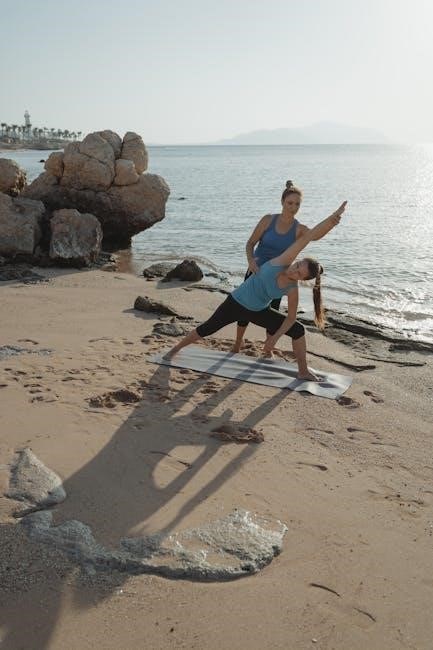
A detailed peroneal tendonitis exercises PDF will illustrate the single-leg stance as a foundational exercise for improving balance and proprioception. Start by standing on the affected leg, maintaining a slight bend in the knee. Hold this position for 30 seconds, gradually increasing the duration as your strength improves. Repeat 3-5 times per leg.
The peroneal tendonitis exercises PDF should emphasize maintaining proper form – a straight back, engaged core, and focused gaze. To increase the challenge, perform the exercise with your eyes closed, or on an unstable surface like a foam pad. This exercise strengthens the ankle stabilizers and improves your body’s awareness of its position in space, crucial for preventing re-injury.
Balance Board Exercises
A comprehensive peroneal tendonitis exercises PDF will detail balance board exercises as a progression from single-leg stance, enhancing proprioception and stability. Begin with a stable balance board and practice maintaining your balance for 30-60 seconds. Gradually increase the difficulty by using a wobble board or rocker board, as demonstrated in the peroneal tendonitis exercises PDF.
Focus on controlled movements, avoiding sudden shifts in weight. The peroneal tendonitis exercises PDF should advise starting with both feet on the board, then progressing to single-leg use. These exercises challenge the peroneal tendons and surrounding muscles, improving ankle control and reducing the risk of future sprains. Remember to perform these exercises near a stable surface for support if needed.
Heel Walks & Toe Walks

A detailed peroneal tendonitis exercises PDF will outline heel and toe walks as crucial exercises for strengthening the ankle and calf muscles. Heel walks involve walking on your heels, keeping your toes lifted, for 20-30 seconds. This strengthens the tibialis anterior and improves dorsiflexion. Conversely, toe walks involve walking on your toes, keeping your heels off the ground, for the same duration.
The peroneal tendonitis exercises PDF emphasizes maintaining good form and a controlled pace. These exercises target different muscle groups, contributing to overall ankle stability. They are often included in rehabilitation programs to restore normal gait mechanics. Perform these exercises on a flat, even surface, and stop if you experience any pain. Consult the peroneal tendonitis exercises PDF for proper technique.
Advanced Exercises & Return to Activity

A comprehensive peroneal tendonitis exercises PDF details advanced exercises for a gradual return to activity. Calf raises, performed with and without weight, strengthen the calf muscles, crucial for ankle stability. Lateral lunges improve strength in the hip abductors and adductors, supporting ankle control. Agility drills, like cone drills and shuttle runs, progressively challenge the ankle’s dynamic stability.
The peroneal tendonitis exercises PDF stresses a phased approach. Begin with low-impact activities and gradually increase intensity. Monitor for pain; any recurrence necessitates a return to earlier phases. Proper warm-up and cool-down routines are vital. The peroneal tendonitis exercises PDF will guide you on appropriate progression, ensuring a safe and effective return to your desired activity level, minimizing re-injury risk.
Calf Raises
Detailed instructions for calf raises are included in a peroneal tendonitis exercises PDF. Begin with bilateral calf raises, focusing on controlled movements. Progress to single-leg calf raises as strength improves, utilizing a wall for balance if needed. Variations include straight-knee calf raises (targeting the gastrocnemius) and bent-knee calf raises (targeting the soleus).
The peroneal tendonitis exercises PDF emphasizes proper form: maintain a neutral spine, avoid knee valgus (knees collapsing inward), and fully extend the ankle at the top of the movement. Add resistance with dumbbells or a weighted vest as tolerated. This exercise strengthens the calf muscles, providing crucial support to the peroneal tendons and improving overall ankle stability, as outlined in the peroneal tendonitis exercises PDF.
Lateral Lunges
A comprehensive peroneal tendonitis exercises PDF details lateral lunges as a key exercise for peroneal tendon rehabilitation. Start by standing with feet hip-width apart. Step laterally with one leg, bending that knee while keeping the other leg straight. Maintain a straight back and chest up throughout the movement.
The peroneal tendonitis exercises PDF stresses controlled motion and avoiding knee valgus. Focus on pushing your hips back as you lunge. As strength increases, consider adding light dumbbells. Lateral lunges strengthen the hip abductors and adductors, improving stability and control around the ankle joint. The peroneal tendonitis exercises PDF recommends 3 sets of 10-12 repetitions per leg, gradually increasing the range of motion as tolerated.
Agility Drills (Cone Drills, Shuttle Runs)
A detailed peroneal tendonitis exercises PDF outlines agility drills as a late-stage rehabilitation component. Cone drills and shuttle runs enhance proprioception and dynamic stability. Begin with simple cone drills, weaving in and out of cones at a slow pace, focusing on controlled footwork.
The peroneal tendonitis exercises PDF emphasizes gradual progression. Shuttle runs can be introduced once cone drills are mastered. Maintain a low center of gravity and avoid sudden changes in direction. These drills challenge the peroneal tendons in a functional manner, preparing the ankle for return to activity. The peroneal tendonitis exercises PDF suggests 2-3 sets of each drill, with adequate rest between sets, monitoring for any pain or discomfort.
Preventing Re-Injury
A comprehensive peroneal tendonitis exercises PDF stresses proactive measures to avoid recurrence. Proper footwear is paramount; choose shoes with good arch support and ankle stability. Consistent warm-up and cool-down routines, detailed within the peroneal tendonitis exercises PDF, prepare muscles for activity and promote recovery.
Gradually increase activity levels, avoiding sudden spikes in intensity or duration. The peroneal tendonitis exercises PDF recommends a 10% rule – increasing activity by no more than 10% per week. Continue strengthening and proprioceptive exercises even after symptom resolution. Regularly assess your body for early signs of discomfort and address them promptly. Adhering to these guidelines, as outlined in the peroneal tendonitis exercises PDF, significantly reduces the risk of re-injury.
Proper Footwear
Selecting appropriate footwear is crucial, as detailed in a comprehensive peroneal tendonitis exercises PDF. Shoes should provide ample arch support to minimize stress on the peroneal tendons. Look for features like a firm heel counter to control excessive pronation and supination. Avoid high heels or completely flat shoes, as they can exacerbate the condition.
The peroneal tendonitis exercises PDF recommends considering shoes designed for your specific foot type and activity level. Replace worn-out shoes regularly, as cushioning and support diminish over time. Orthotics, custom or over-the-counter, can provide additional support and alignment. Properly fitted footwear, as emphasized in the peroneal tendonitis exercises PDF, is a foundational element in both treatment and prevention of peroneal tendonitis.
Warm-up & Cool-down Routines
A detailed peroneal tendonitis exercises PDF stresses the importance of preparing your body before and after exercise. Warm-ups should include 5-10 minutes of low-impact cardio, like walking, followed by dynamic stretches focusing on ankle mobility – ankle circles, toe raises, and heel walks. This increases blood flow and prepares the tendons for activity.
Cool-downs, as outlined in the peroneal tendonitis exercises PDF, are equally vital. Spend 5-10 minutes performing static stretches, holding each stretch for 20-30 seconds. Focus on calf stretches and peroneal muscle stretches. Consistent warm-up and cool-down routines, detailed within the peroneal tendonitis exercises PDF, enhance flexibility, reduce muscle soreness, and minimize the risk of re-injury.
Gradual Increase in Activity Level
A comprehensive peroneal tendonitis exercises PDF emphasizes a progressive return to activity. Avoid sudden increases in intensity or duration. Begin with low-impact activities like walking on flat surfaces, gradually increasing distance and incline. The peroneal tendonitis exercises PDF recommends increasing activity by no more than 10% per week.
Listen to your body; pain is a signal to slow down. The peroneal tendonitis exercises PDF details a phased approach, progressing from walking to jogging, then to running and sport-specific drills. Prioritize proper form and technique throughout. Consistent monitoring of symptoms, as guided by the peroneal tendonitis exercises PDF, is crucial to prevent re-injury and ensure a successful recovery.
Long-Term Management & Considerations
Sustained relief, detailed in a peroneal tendonitis exercises PDF, requires ongoing commitment. Continue performing strengthening and proprioceptive exercises even after symptom resolution to maintain stability. Regular stretching of the calf muscles and peroneal tendons, as outlined in the peroneal tendonitis exercises PDF, is vital.
Pay attention to footwear and consider orthotics if needed. The peroneal tendonitis exercises PDF stresses the importance of avoiding activities that aggravate symptoms. Be mindful of training volume and intensity. If pain recurs, promptly revisit the exercises in the peroneal tendonitis exercises PDF and consider seeking professional guidance to prevent chronic issues and ensure long-term ankle health.
When to Seek Professional Help
Consult a healthcare professional if initial home treatment, including exercises from a peroneal tendonitis exercises PDF, doesn’t provide relief within a few weeks. Seek immediate attention for severe pain, inability to bear weight, or noticeable swelling. A doctor can accurately diagnose the condition and rule out other potential issues.
They may recommend further imaging, like an MRI, to assess tendon damage. A physical therapist can guide you through a personalized rehabilitation program, potentially supplementing the peroneal tendonitis exercises PDF. Don’t hesitate to seek expert advice if symptoms worsen or interfere with daily activities; early intervention prevents chronic complications.
Potential Complications
Ignoring peroneal tendonitis and neglecting exercises from a peroneal tendonitis exercises PDF can lead to chronic pain and instability. Untreated inflammation may progress to tendinosis, a degenerative condition of the tendon. In severe cases, tendon tears can occur, potentially requiring surgical intervention.
Chronic instability increases the risk of ankle sprains and further injury. Persistent pain can alter gait mechanics, leading to problems in the knee, hip, and lower back. Following a structured rehabilitation plan, including consistent exercise as outlined in a peroneal tendonitis exercises PDF, is crucial to prevent long-term complications and restore optimal function.
Resources for Peroneal Tendonitis Information (PDF Downloads)
Access comprehensive guides and structured exercise programs with our curated collection of peroneal tendonitis exercises PDF downloads. These resources, compiled from leading orthopedic sources, provide detailed instructions and illustrations for each exercise phase.
Downloadable PDFs cover topics ranging from initial pain management and R.I.C.E. protocol implementation to advanced strengthening and proprioceptive drills. Find tailored programs for early-stage, strengthening, and balance phases. These resources empower you to actively participate in your recovery. Always consult with a healthcare professional before starting any new exercise regimen, even with a peroneal tendonitis exercises PDF guide.