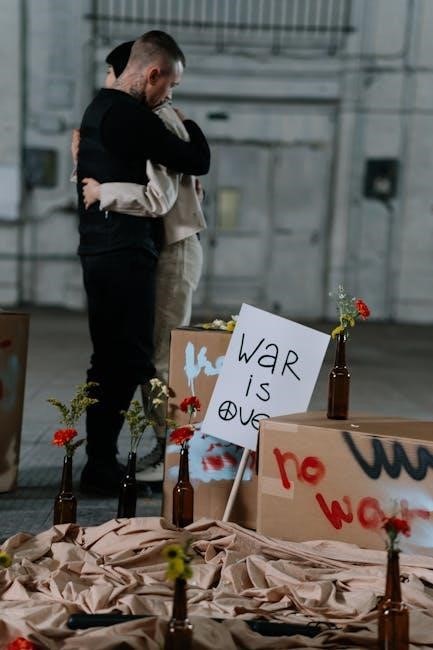
This era’s upheaval‚ marked by World War I and the Russian Revolution‚ demands a detailed understanding of interconnected events and their lasting global consequences.
The Russian Revolution‚ born from wartime pressures‚ reshaped Russia and ignited revolutionary fervor across the 20th century’s world stage.
Numerous forces – internal‚ external‚ long-term‚ and accidental – converged‚ creating a transformative period in global history and political thought.
Historical Context: Early 20th Century Upheaval
The dawn of the 20th century witnessed a world teetering on the brink of immense change‚ a period characterized by escalating tensions and profound societal shifts. Existing power structures faced increasing strain from burgeoning nationalism‚ aggressive imperialism‚ and intricate alliance systems‚ creating a volatile international landscape.
Within Russia‚ Tsarist autocracy struggled to adapt to modernization‚ fostering widespread discontent among its populace. Economic hardships‚ coupled with social inequalities and political repression‚ fueled revolutionary sentiments. Simultaneously‚ Europe braced for conflict‚ unaware of the catastrophic scale that World War I would soon unleash‚ fundamentally altering the course of history.
These interwoven factors set the stage for unprecedented upheaval‚ culminating in both global war and internal revolution.
The Interconnectedness of War and Revolution
World War I served not merely as a backdrop to the Russian Revolution‚ but as a critical catalyst‚ inextricably linking the two monumental events. The war’s immense strain on Russia’s economy‚ coupled with devastating military defeats‚ exposed the Tsarist regime’s weaknesses and eroded public trust.
Wartime hardships – food shortages‚ economic collapse‚ and massive casualties – exacerbated existing social and political tensions‚ creating fertile ground for revolutionary movements. The war’s disruption of normal life and the government’s inability to address these crises ultimately triggered the February Revolution and paved the way for the Bolsheviks’ rise to power.
Thus‚ war and revolution were not separate occurrences‚ but rather interconnected phases of a larger transformative process.
Causes of World War I
Complex factors‚ including imperialism‚ alliances‚ nationalism‚ and militarism‚ created a volatile European landscape ripe for conflict and ultimately‚ global war.
The assassination of Archduke Franz Ferdinand acted as the immediate spark‚ igniting pre-existing tensions and triggering a chain reaction of declarations of war.
Long-Term Causes: Imperialism & Alliances
Imperial competition fueled rivalries as European powers scrambled for colonies and resources‚ creating friction and distrust. This quest for empire intensified existing tensions and fostered a climate of suspicion.
A complex web of alliances – like the Triple Alliance (Germany‚ Austria-Hungary‚ Italy) and the Triple Entente (France‚ Russia‚ Great Britain) – meant a localized conflict could easily escalate.
These alliances‚ intended to maintain peace through a balance of power‚ ironically obligated nations to defend each other‚ transforming a regional dispute into a widespread war.
The system’s rigidity and the commitment to mutual defense ultimately contributed to the rapid and devastating expansion of the conflict across Europe.
Short-Term Causes: The Assassination of Archduke Franz Ferdinand
The assassination of Archduke Franz Ferdinand‚ heir to the Austro-Hungarian throne‚ on June 28‚ 1914‚ in Sarajevo‚ served as the immediate trigger for World War I.
Gavrilo Princip‚ a Serbian nationalist‚ committed the act‚ motivated by a desire to liberate Bosnia from Austro-Hungarian rule and unite South Slavs.
Austria-Hungary‚ backed by Germany‚ issued an ultimatum to Serbia with harsh demands‚ intending to punish Serbia and assert its dominance in the Balkans.
Serbia’s partial acceptance wasn’t enough‚ and Austria-Hungary declared war‚ activating the alliance system and rapidly escalating the crisis into a global conflict.
Nationalism and Militarism as Contributing Factors
Intense nationalism fueled rivalries between European powers‚ fostering a climate of suspicion and hostility. Each nation believed in its cultural and political superiority.
This fervent patriotism encouraged aggressive foreign policies and a willingness to defend national interests‚ even through military force‚ creating a volatile atmosphere.
Militarism‚ the glorification of military power‚ led to an arms race as nations competed to build larger and more powerful armies and navies.
This build-up created a sense of inevitability regarding war‚ and military leaders gained significant influence‚ advocating for proactive strategies.
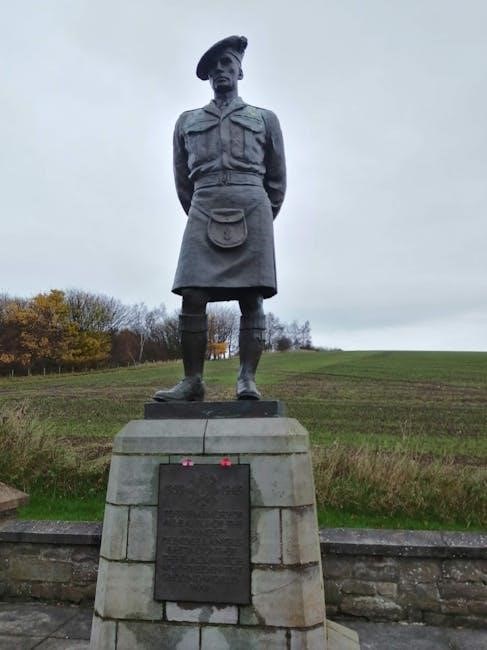
The Russian Revolution: A Detailed Overview
The Revolution dramatically transformed Russia and its empire‚ planting the seeds of global revolution at the heart of 20th-century world history.
Pre-Revolutionary Russia: Tsarist Autocracy
Prior to 1917‚ Russia was governed by an autocratic Tsarist regime‚ where the Tsar held absolute power‚ resisting meaningful political reform. This system‚ deeply rooted in tradition‚ concentrated authority in the hands of the Romanov dynasty‚ limiting individual freedoms and political participation.
The Tsar’s reactionary policies‚ including dissolving the Duma (Russia’s parliament)‚ fueled discontent even among moderate nobles; This rigid structure‚ coupled with social and economic inequalities‚ created a volatile environment ripe for revolution‚ as the populace yearned for representation and change.
Social and Economic Discontent in Russia
Early 20th-century Russia was plagued by widespread social and economic hardship‚ fostering deep discontent among its population. The vast majority of Russians were impoverished peasants‚ burdened by land hunger and oppressive working conditions in burgeoning industrial centers.
Ethnic minorities within the Russian Empire faced discrimination and suppression‚ fueling nationalist sentiments and unrest. This combination of economic inequality‚ social injustice‚ and ethnic tensions created a fertile ground for revolutionary movements seeking radical change and a more equitable society.
The February Revolution: Overthrow of the Tsar
In February 1917‚ escalating discontent and wartime failures culminated in the spontaneous February Revolution‚ leading to the abdication of Tsar Nicholas II. Triggered by food shortages‚ strikes‚ and military defeats‚ protests erupted in Petrograd‚ quickly gaining momentum and drawing support from soldiers and workers.
The Tsar’s government‚ weakened by years of mismanagement and unpopular policies‚ proved unable to quell the unrest. This resulted in the establishment of a Provisional Government‚ intended to rule until a constituent assembly could determine Russia’s future political system.
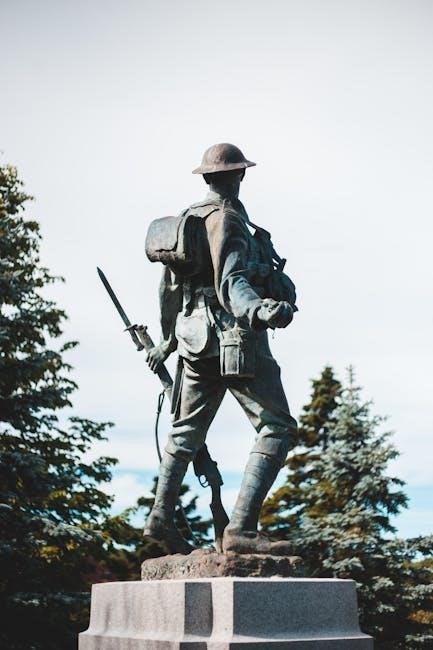
World War I’s Impact on Russia
Military failures‚ economic hardship‚ and widespread food shortages severely undermined the Tsarist regime‚ eroding public trust and fueling revolutionary sentiment across Russia.
Military Failures and Losses
Russia’s involvement in World War I was marked by a series of devastating military defeats‚ exposing the inadequacies of its leadership and the army’s outdated equipment. Battles like Tannenberg and the Masurian Lakes resulted in immense casualties and territorial losses‚ shattering morale.
Poorly equipped and supplied‚ Russian soldiers faced a technologically superior enemy‚ leading to continuous setbacks on the Eastern Front. These failures not only drained Russia’s resources but also fueled widespread discontent among the population‚ contributing significantly to the growing unrest and ultimately‚ revolution.
Economic Hardship and Food Shortages
The strain of World War I severely crippled the Russian economy‚ leading to widespread economic hardship and acute food shortages throughout the country. The war disrupted agricultural production and transportation networks‚ causing prices to soar and supplies to dwindle‚ particularly in urban centers.
These conditions sparked widespread hunger and desperation among the populace‚ exacerbating existing social tensions. Bread riots and strikes became increasingly common‚ demonstrating the growing anger and frustration with the Tsarist regime’s inability to address the basic needs of its citizens.
Erosion of Public Trust in the Tsarist Regime
Military failures and economic woes dramatically eroded public trust in Tsar Nicholas II and the autocratic Tsarist regime. Perceived incompetence in leading the war effort‚ coupled with widespread suffering at home‚ fueled discontent among all segments of Russian society.
The Tsar’s decision to personally take command of the army‚ despite lacking military expertise‚ further damaged his reputation. Rumors of corruption and the influence of Grigori Rasputin at court intensified the sense of crisis and undermined the legitimacy of the government.
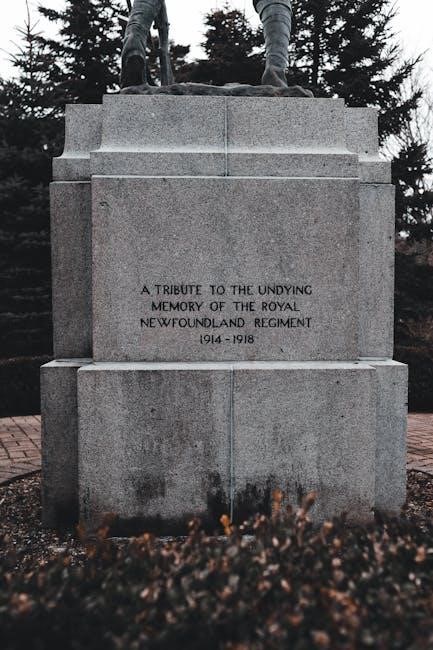
The October Revolution & Bolshevik Rise to Power
Led by Lenin‚ the Bolsheviks seized power‚ establishing a communist state and fundamentally altering Russia’s political landscape through revolutionary action.
This pivotal moment transformed the Russian Empire‚ planting the seeds of a new world order and impacting 20th-century history.
Vladimir Lenin and the Bolshevik Party
Vladimir Lenin‚ a pivotal figure‚ skillfully steered the Bolshevik Party towards revolution‚ capitalizing on widespread discontent within Russia. He adapted Marxist ideology to Russian conditions‚ advocating for a vanguard party of professional revolutionaries to lead the proletariat.
The Bolsheviks‚ initially a minority faction‚ gained traction by promising “Peace‚ Land‚ and Bread‚” resonating with war-weary soldiers‚ land-hungry peasants‚ and starving urban workers. Lenin’s charismatic leadership and strategic brilliance were instrumental in organizing and executing the October Revolution‚ ultimately reshaping Russia’s destiny.
The Bolshevik Seizure of Power
The Bolsheviks‚ under Lenin’s direction‚ strategically seized power in October 1917‚ exploiting the weakness of the Provisional Government and widespread public unrest. This wasn’t a spontaneous uprising‚ but a carefully planned operation‚ utilizing Red Guard units to occupy key infrastructure in Petrograd.
The Winter Palace‚ symbol of Tsarist authority‚ was stormed with minimal resistance‚ marking the symbolic end of the Provisional Government. This swift and decisive action established Bolshevik control‚ paving the way for the creation of a communist state and fundamentally altering Russia’s political landscape.
Establishment of a Communist State
Following the Bolshevik seizure of power‚ the foundation of a communist state was rapidly constructed‚ guided by Marxist-Leninist ideology. Key decrees were issued‚ nationalizing land‚ banks‚ and industries‚ transferring ownership to the state and aiming for economic equality.
The establishment of the Cheka‚ the Bolshevik secret police‚ signaled a commitment to suppressing opposition and consolidating control. This new regime embarked on a path of radical social and political transformation‚ fundamentally reshaping Russian society and setting the stage for decades of communist rule.
Comparing the Causes of Revolution
Underlying social and economic issues fueled both revolutions‚ while war acted as a critical trigger‚ exacerbating existing tensions and political oppression.
Lack of representation and widespread discontent created fertile ground for revolutionary movements seeking fundamental societal change.
Similarities in Underlying Social and Economic Issues
Both World War I and the Russian Revolution stemmed from deep-seated social and economic inequalities. Pre-war Russia suffered from vast disparities in wealth‚ with a small elite controlling most land and resources‚ while the peasantry faced poverty and land hunger.
Similarly‚ pre-war Europe experienced growing social stratification and economic hardship for the working class. The strains of industrialization and urbanization created discontent.
Wartime economic disruption‚ including food shortages and inflation‚ intensified these existing problems in both contexts‚ fueling popular unrest and demands for change.
The Role of War in Triggering Revolution
World War I acted as a critical catalyst for revolution in Russia‚ exacerbating existing tensions and creating conditions ripe for upheaval. Military failures on a massive scale eroded public trust in the Tsarist regime‚ exposing its incompetence and corruption.
The war’s economic strain – food shortages‚ inflation‚ and widespread hardship – fueled popular discontent and strikes.
These pressures created a revolutionary atmosphere‚ providing opportunities for radical groups like the Bolsheviks to gain support and ultimately seize power‚ transforming the war into a revolution.
Political Oppression and Lack of Representation
Tsarist autocracy fostered deep-seated political oppression‚ denying basic rights and limiting meaningful representation for the vast majority of the Russian population. The Tsar’s occasional dissolution of the Duma‚ Russia’s parliament‚ stifled any attempts at democratic governance.
This lack of political voice fueled resentment among various social groups‚ including the nobility‚ who desired greater participation in decision-making.
Ethnic minorities also suffered under Russian domination‚ increasing unrest and contributing to the revolutionary climate.
Consequences of the Russian Revolution
The Revolution triggered a brutal civil war‚ ultimately leading to the formation of the Soviet Union and profoundly reshaping Russian society and its cultural landscape.
The Russian Civil War (1917-1922)
Following the Bolshevik seizure of power‚ Russia descended into a devastating civil war from 1917 to 1922. This conflict pitted the Bolshevik “Reds” against a diverse array of opponents‚ collectively known as the “Whites‚” including monarchists‚ liberals‚ and other socialist factions.
Foreign powers‚ like Britain‚ France‚ and the United States‚ intervened‚ supporting the Whites with supplies and troops‚ hoping to overthrow the Bolshevik regime. The war was characterized by immense brutality‚ widespread famine‚ and significant loss of life‚ leaving a lasting scar on Russian society.
Ultimately‚ the Bolsheviks emerged victorious‚ consolidating their control over Russia and paving the way for the establishment of the Soviet Union.
Formation of the Soviet Union
In 1922‚ following the conclusion of the Russian Civil War‚ the Russian Soviet Federative Socialist Republic (RSFSR) united with other Soviet republics – Ukraine‚ Belarus‚ and Transcaucasia – to formally establish the Union of Soviet Socialist Republics (USSR). This marked a pivotal moment in Russian and world history.
The Soviet Union was the world’s first constitutionally socialist state‚ founded on Marxist-Leninist ideology. It aimed to create a classless society and abolish private property‚ centralizing economic and political control under the Communist Party.
This new nation profoundly impacted the 20th century‚ becoming a major global power and a symbol of communist aspirations.
Impact on Russian Society and Culture
The Revolution dramatically reshaped Russian society‚ dismantling the old Tsarist order and ushering in a period of radical social and cultural transformation. Traditional hierarchies were overthrown‚ and attempts were made to eradicate class distinctions.
Cultural expression underwent significant changes‚ with the promotion of proletarian art and literature. Religious institutions faced persecution‚ and traditional values were challenged by communist ideology.
Despite modernization efforts‚ the Revolution also brought widespread hardship and repression‚ leaving a lasting imprint on the Russian psyche.
World War I’s Global Consequences
The Treaty of Versailles redrew borders and fostered resentment‚ while the League of Nations aimed for peace but ultimately proved ineffective in preventing future conflicts.
The Treaty of Versailles and its Aftermath
The Treaty of Versailles‚ signed in 1919‚ formally concluded World War I‚ but its harsh terms sowed the seeds of future conflict. Germany faced significant territorial losses‚ substantial financial reparations‚ and strict military limitations.
These punitive measures fostered deep resentment within Germany‚ contributing to economic hardship and political instability. The treaty’s failure to address underlying issues of nationalism and self-determination also fueled discontent across Europe.
Ultimately‚ the Treaty of Versailles‚ intended to secure lasting peace‚ inadvertently created conditions that contributed to the rise of extremist ideologies and the outbreak of World War II.
Rise of New Nations and Redrawing of Borders
World War I’s conclusion dramatically reshaped the political map of Europe‚ leading to the dissolution of empires and the emergence of new‚ independent nations. The Austro-Hungarian‚ Ottoman‚ and Russian Empires fragmented‚ giving rise to countries like Poland‚ Czechoslovakia‚ and Yugoslavia.
Borders were redrawn based on principles of national self-determination‚ though often imperfectly‚ creating new ethnic and political tensions. This process aimed to align borders with ethnic groups‚ but inevitably led to minority populations within newly formed states.
These changes fundamentally altered the European power balance and laid the groundwork for future conflicts.
The League of Nations and Attempts at Collective Security
Following the devastation of World War I‚ the League of Nations was established with the ambitious goal of preventing future global conflicts through collective security. This international organization aimed to resolve disputes peacefully through diplomacy and cooperation‚ rather than resorting to war.
Member states pledged to protect each other against aggression‚ creating a system of mutual defense. However‚ the League faced significant challenges‚ including the absence of major powers like the United States and its limited enforcement capabilities.
Despite its shortcomings‚ it represented a crucial first step towards international cooperation.
The Russian Revolution’s Global Impact
The Revolution spurred communist ideology’s spread‚ influencing anti-colonial movements worldwide and ultimately laying the groundwork for the tensions of the Cold War era.
Spread of Communist Ideology
The Bolshevik victory in Russia dramatically altered the global political landscape‚ serving as a beacon for communist and socialist movements internationally. This success inspired revolutionary groups seeking to overthrow capitalist systems and establish worker-led states across Europe‚ Asia‚ and Latin America.
Communist parties formed‚ advocating for radical social and economic change‚ often modeled after the Soviet system. The Comintern‚ established in 1919‚ actively promoted global revolution‚ providing support and guidance to these emerging parties‚ further accelerating the dissemination of communist principles worldwide.
Influence on Anti-Colonial Movements
The Russian Revolution profoundly impacted anti-colonial struggles globally‚ offering a powerful ideological alternative to Western imperialism. The Bolsheviks’ denunciation of colonialism and advocacy for self-determination resonated deeply with colonized populations seeking independence from European powers.
Revolutionary rhetoric and Soviet support emboldened nationalist movements in Asia‚ Africa‚ and the Middle East. These movements adopted socialist principles and strategies‚ challenging colonial rule and demanding national liberation‚ fundamentally reshaping the 20th-century geopolitical order.
The Cold War Origins
The Russian Revolution laid crucial groundwork for the Cold War‚ establishing a fundamental ideological divide between communism and capitalism. Western powers‚ fearing the spread of Bolshevik ideology‚ intervened in the Russian Civil War‚ fostering deep mistrust and antagonism.
This early conflict solidified opposing geopolitical blocs‚ setting the stage for decades of tension. The Soviet Union’s emergence as a communist superpower directly challenged the United States‚ initiating a global struggle for influence that defined much of the 20th century.
Key Figures in World War I & The Russian Revolution
Tsar Nicholas II’s autocratic rule and Woodrow Wilson’s idealism contrasted sharply with Vladimir Lenin’s revolutionary fervor‚ shaping the era’s tumultuous course.
Tsar Nicholas II
Nicholas II‚ the last Tsar of Russia‚ embodied autocratic rule and faced mounting pressures leading to his downfall. His reactionary policies‚ including dissolving the Duma – Russia’s parliament established after the 1905 revolution – fueled widespread dissatisfaction‚ even among moderate nobles;
He struggled to address the growing unrest among Russia’s diverse ethnic minorities‚ who resented Russian domination. His leadership during World War I proved disastrous‚ exacerbating existing social and economic problems and ultimately contributing to the loss of public trust and the February Revolution.
Vladimir Lenin
Vladimir Lenin‚ a pivotal figure‚ spearheaded the Bolshevik Party and masterfully capitalized on Russia’s wartime chaos. He skillfully articulated a vision of communist revolution‚ promising “peace‚ land‚ and bread” to a war-weary and impoverished populace.
Lenin’s leadership was instrumental in the Bolshevik seizure of power during the October Revolution. He established a communist state‚ fundamentally altering Russia’s political and social landscape‚ and profoundly influencing 20th-century global history through the spread of communist ideology.
Woodrow Wilson
Woodrow Wilson‚ as the President of the United States‚ played a significant role in shaping the post-World War I world order. He championed the idea of a League of Nations‚ envisioning it as a forum for international cooperation and collective security‚ aiming to prevent future global conflicts.
Wilson’s “Fourteen Points” outlined his vision for a just and lasting peace‚ though many of his ideals were compromised during the Treaty of Versailles negotiations‚ leaving a complex legacy regarding the war’s aftermath.
Ideologies in Conflict
The era witnessed a clash between autocracy and communism‚ capitalism and socialism‚ alongside diverse expressions of nationalism‚ fundamentally reshaping political landscapes.
Autocracy vs. Communism
Tsarist Russia embodied autocracy‚ a system of absolute rule by the Tsar‚ resisting meaningful political representation and clinging to traditional hierarchies. This contrasted sharply with communism‚ as espoused by Lenin and the Bolsheviks‚ advocating for a classless society and collective ownership.
The Bolsheviks aimed to dismantle the Tsarist regime’s centralized power‚ replacing it with a decentralized‚ worker-controlled state. This ideological battle fueled the revolution‚ representing a fundamental shift from inherited privilege to egalitarian ideals‚ profoundly altering Russia’s socio-political structure.
Capitalism vs. Socialism
The Russian Revolution presented a direct challenge to the prevailing capitalist systems of Western Europe‚ advocating for socialism as an alternative economic model. Capitalism‚ emphasizing private ownership and free markets‚ stood in stark opposition to socialism’s focus on collective control and equitable distribution of wealth.
Bolshevik ideology envisioned abolishing private property‚ nationalizing industries‚ and prioritizing societal needs over individual profit. This fundamental divergence sparked global debate‚ influencing economic and political movements throughout the 20th century and beyond‚ shaping the world’s ideological landscape.
Nationalism and its Diverse Manifestations
Nationalism fueled both World War I and the Russian Revolution‚ though in distinct ways. In Europe‚ it manifested as aggressive imperial rivalries and the desire for national self-determination among ethnic groups within empires.
Within Russia‚ nationalism intertwined with revolutionary fervor‚ seeking liberation from Tsarist autocracy and the creation of a unified‚ ethnically diverse state. However‚ competing national aspirations within the Russian Empire also contributed to internal conflicts and ultimately‚ its dissolution.
Long-Term Effects and Legacy
The 20th century was profoundly shaped by these events‚ influencing geopolitics and sparking ongoing debates about ideology‚ power‚ and the nature of revolution.
The 20th Century Shaped by These Events
The First World War and the Russian Revolution irrevocably altered the 20th century’s trajectory‚ dismantling empires and fostering new political ideologies. The war’s devastation fueled widespread disillusionment‚ creating fertile ground for revolutionary movements like Bolshevism.
The rise of communism presented a direct challenge to capitalist systems‚ initiating decades of ideological conflict and proxy wars. Furthermore‚ the redrawing of borders and the establishment of the League of Nations‚ though flawed‚ represented early attempts at international cooperation.
These events laid the groundwork for future conflicts‚ including World War II and the Cold War‚ fundamentally reshaping the global political landscape.
Continuing Relevance to Contemporary Geopolitics
The echoes of World War I and the Russian Revolution resonate in today’s geopolitical landscape‚ particularly in understanding ongoing conflicts and power dynamics. The legacy of nationalism‚ a key factor in both events‚ continues to fuel separatist movements and international tensions.
The ideological struggle between communism and capitalism‚ born from this era‚ persists in modified forms‚ influencing global alliances and economic policies.
Moreover‚ the quest for collective security‚ initiated with the League of Nations‚ informs contemporary international organizations like the United Nations‚ striving for global stability.
Historiography and Ongoing Debates
The interpretation of World War I and the Russian Revolution remains a vibrant field of historical debate. Historians continually reassess the relative importance of long-term structural factors versus short-term triggers in causing these upheavals.
Discussions persist regarding the agency of key figures‚ like Lenin and Tsar Nicholas II‚ and the extent to which they shaped events versus being products of broader forces.
Furthermore‚ the legacy of these events is contested‚ with differing perspectives on their impact on 20th-century global politics and their relevance to contemporary challenges.